
WEEDS, WEEDS, everywhere are WEEDS, blocking out the scenery, breaking my mind…
(Apologies to Five Man Electrical Band – 1971)
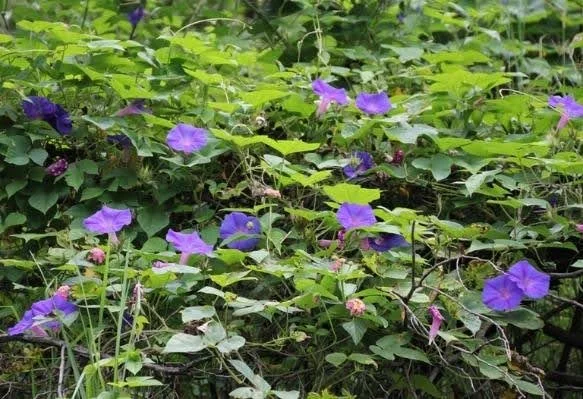
Home gardeners and rainforest restorers are constantly battling the invasion of weeds. And, with the warm weather not only have our trees and plants thrived but also the dreaded weeds. Whilst we are constantly doing battle with weed removal it is ever so satisfying to look back after a good session to see the beauty of the plants without the smothering weeds.
Definition: A weed is a plant considered undesirable in a particular situation, "a plant in the wrong place". Examples are common plants unwanted in human-controlled settings, such as gardens, lawns, parks. Taxonomically, the term "weed" has no botanical significance, because a plant that is a weed in one context is not a weed when growing in a situation where it is wanted. The term weed is also applied to any plant that grows or reproduces aggressively, or is invasive outside its native habitat(1).
Environmental weeds may be defined as plants that have become problems by invading and altering native plant communities. As well as introduced (exotic) plants, weeds can include Australian native plants growing away from their place of origin.(2)
Did you know
Weeds are so aggressive and are amongst the most serious threats to the long-term survival of our native bushland causing species extinction. Weeds cause serious by smothering native plants species and suppressing natural regeneration, thus impacting on other species that depend on them. Weeds can ultimately lead to the destruction of significant native forest remnants and can significantly disrupt entire ecosystems.
Did you know
Many “weeds” that have infiltrated our native bushland are home garden escapees. Dispersal may be due to wind, water runoff, birds and animals, transplanting by humans, rubbish dumping, inappropriate urban development, inappropriate fire regimes, movement by domestic, commercial and recreational vehicles and heavy machinery.
Some common garden escapees include, but not limited to: Lantana, Camphor Laurel, Golden Rain Tree, Privet, exotic Pigface, Umbrella tree, Coffee, Guava, Passionfruit Vine, Butterfly Bush, Water Hyacinth, Water Lettuce, Canna Lily, Watsonia, Gladiolus, Madeira Vine, Asparagus Fern, Coral Berry, Morning Glory, Coral Tree, Murraya, Yellow Bells, Hairy Commelina (benghalensis/diffusa), Tradescantia (Wandering Jew), Resurrection plant, Glory Lily, Mother of Millions, Kahili Ginger, Singapore Daisy. As well as other grass weeds such as Kikuyu, Paspalum, Oxalis, Setaria, among a host of others.
There are various methods of removal of weeds, depending on type, spread, size. Landcare groups mostly hand-dig and cut to remove, but sometimes herbicide application is required when the weed is widespread or a large tree. This may include foliage spraying, cut-scrape-paint, scrape-gouge-paint, tree frilling/drilling/injecting. [Conducted by trained persons].
It is important for home gardeners to be aware of what plants are likely to ‘spread’ outside their home boundaries and become a ‘pest’ for others and the greater environment. Awareness and due diligence is the key to reducing weed infestation in our natural spaces.
Reference:
Wikipedia
BSRLG-Common Weeds of Subtropical Rainforests of Eastern Australia
More resources:
Some resources for weed identification and control include:
Ballina Shire Urban Garden Guide - ballina-urban-garden-guide.pdf
NOXIOUS WEEDS NSW Far North Coast – Rous County Council - Rous Priority Weeds 2025 by Rous County Council - Issuu
BigScrub Rainforest Landcare Group – www.bigscrubrainforest.org/big-scrub-landcare-resources/
Northern Rivers Invasive Plants Action Strategy 2009-2013. For the use of all public & private land managers - (PDF) Northern Rivers Invasive Plants Action Strategy 2009-2013
